Computational Thinking are the skills and cognitive capabilities which directly relate to problem solving. As discussed in the EDUC3620 lecture this week, there are a number of emerging technologies which would promote creativity and learning in the classroom dependent on what stage the students are at. Both ACARA and NESA advocate the development of computational thinking and improved digital literacy for all students (ACARA, n.d.; NESA, n.d.).
A programming puzzle developed by Blockly Games is the ‘Blockly Maze’, which teaches programming through ‘loops’ and conditional instruction (Blockly Games, n.d.). The game begins with easy levels, but progressively becomes difficult. This is extremely important in order to reach all students in the classroom, or as Resnick et al. (2009) describes it, a ‘large classroom’ approach. The idea of a low floor (easy entry for all students), high ceiling (allows more advanced students to be challenged progressively) and wide walls (multiple methods can be tried) in Blockly Games’ Maze means that all students have the ability to fail and succeed. Students must decompose the problem, undertake data analysis, create algorithms and use their own abstraction to complete levels.

Blockly Games Maze is similar to a technology like Micro:bit, but Micro:bit is more intuitive for students. While Blockly would be best for secondary students, Micro:Bit can assist computational learning in both primary and secondary students due to a friendly user interface and simple instructions to follow. Hsu, Chang and Hung (2018) believe that more difficult technologies (such as Blockly) develop computational thinking most effectively, but only when teachers can assess student learning performance, student learning status and varying levels of cognitive ability among students in the classroom. Without this knowledge, tasks designed for computational thinking may become pear-shaped as students finish the first 3 levels in 2 minutes but are stuck on the next 3 levels for 50 minutes.
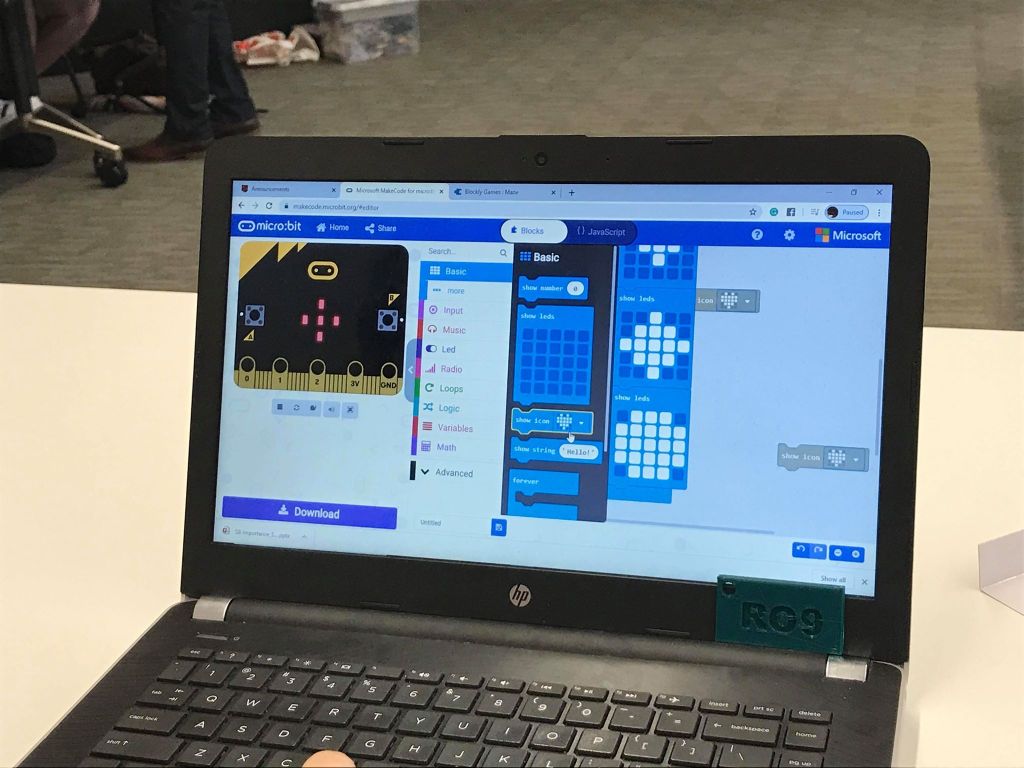
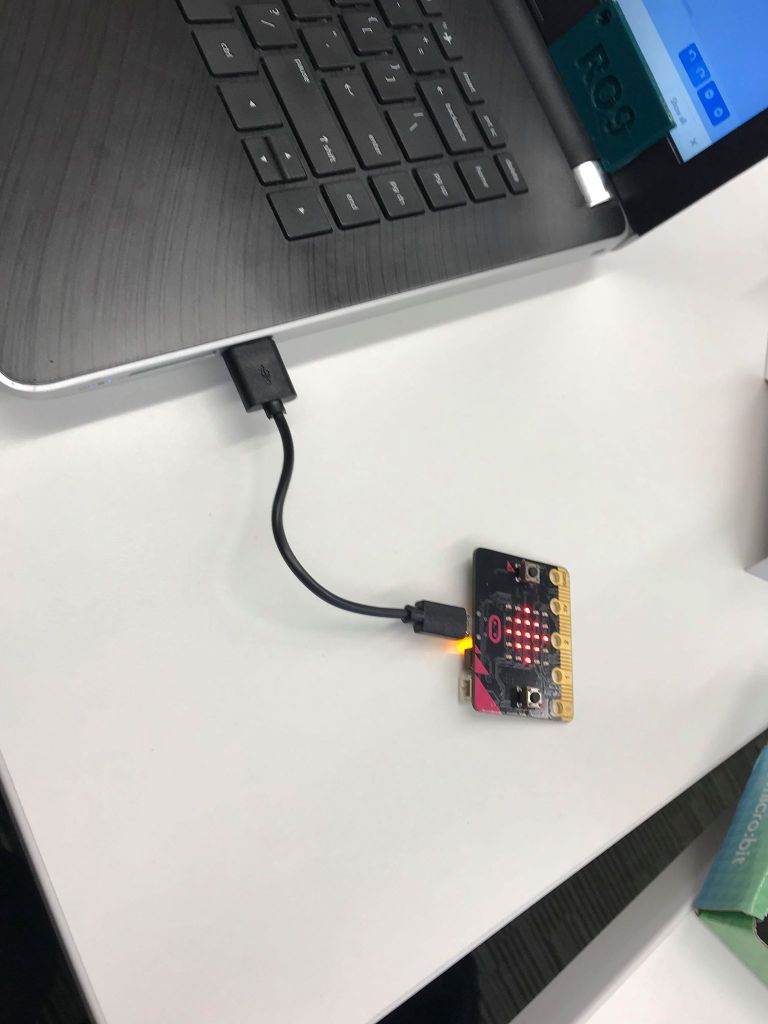
Undoubtedly, Blockly Games will foster creativity, and develop meta cognitive skills which are invaluable for logic and reasoning. Students must work around challenges in the Maze, and progressively fail multiple times in order to succeed. A task such as this would ideally be utilised in Computers or ICT related subjects, however Mathematics (algorithms) or perhaps economics could also utilise Blockly (under the premise that students learn generic procedural rules surrounding economic theory).
Wing (2006) advocates computational thinking as a ‘universally applicable attitude and fundamental skill set for everyone’, and developing a mastery of solving problems and designing solutions are at the crux of this. Do you agree?
References
Australian Curriculum, Assessment and Reporting Authority [ACARA] (n.d.) Computational Thinking. Retrieved from: https://www.australiancurriculum.edu.au/f-10-curriculum/technologies/Glossary/?term=Computational+thinking
Blockly Games (n.d.). Blockly Games: About. Retrieved from https://blockly-games.appspot.com/about?lang=en
Hsu, T. C., Chang, S. C., & Hung, Y. T. (2018). How to learn and how to teach computational thinking: Suggestions based on a review of the literature. Computers & Education, 126, 296-310.
Micro:bit Educational Foundation (n.d.). Micro:bit. Retrieved from https://microbit.org
NSW Education Standards Authority [NESA] (n.d.). Digital Technologies and ICT Resources. Retrieved from: https://www.educationstandards.nsw.edu.au/wps/portal/nesa/k-10/learning-areas/technologies/coding-across-the-curriculum
Resnick, M., Maloney, J., Monroy-Hernández, A., Rusk, N., Eastmond, E., Brennan, K., et al. (2009). Scratch: programming for all. Communications of the ACM, 52(11), 60-67.
Wing, J. M. (2006). Computational thinking. Communications of the ACM, 49(3), 33-35. Available from: http://dl.acm.org.simsrad.net.ocs.mq.edu.au/citation.cfm?doid=1118178.1118215
 EDUC3620 Digital Creativity and Learning - Peter R's blog
Hi Peter,
Computational thinking is definitely a fundamental skill that all people should practice and should be integrated into the classroom as much as possible. I agree with your point about assessment – it isn’t possible for teachers to design lessons that effectively guide learning without planning for the varying levels of student achievement and understanding.
Thanks!
LikeLike
Hi Nathalie,
Thanks for your response. I just feel that teachers should tread carefully when preparing lessons targeting computational thinking. I believe there is a conflict a game such as blocky, since the floor is extremely low, but the ceiling is far too high and reached far too quickly (Level 5/6). Perhaps there are a number of other applications to research, which have more of a ‘middle’ ground that caters to more students in the classroom.
LikeLike
Hi there Peter,
Using the ‘low floor, high ceiling, wide walls’, examples, show your participation in the lectures.
It’s great to see that in Blockly, students are able to use trial and error, which promotes and fosters their computational thinking skills, and also their creativity.
Your comparison to both technologies shows a great understanding of the technological perspective.
LikeLike
Hi Peter,
I really liked that you included the Blockly maze. Particularly, as I found it such an effective way of incrementally building upon coding knowledge without there being a lot of information, rather more exploration and ‘tinkering’. There was definitely a lot of trial and error at certain stages, but that success and confidence that the program built once individuals had that ‘lightbulb’ moment certainly shows the value of the resilience that computational thinking emphasises!
LikeLike