Augmented Reality (AR) systems are those which allow real and virtual objects to coexist in the same space and be interacted with in real time by the user (Azuma, 1997). Akçayır & Akçayır (2017) mention how useability and technical issues are common challenges in the learning environment. It is true that non AR apps such as Tinkercad or Micro:Bit pose less issues, but they don’t provide the possibilities of merging the real and virtual world either!
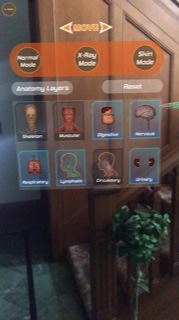
When discussing AR technology, the apps tested this week posed minimal issues. The free-to-use Anatomy 4D app was particularly insightful, with the ability to add/reduce/resize each layer of the anatomy. In a biology or PDHPE lesson, this would be extremely effective to engage students and inspire creative thinking through an analysis of each system, followed by a test with visual cues. Furthermore, Anatomy 4D would be suitable for all students, albeit as an introduction to AR and the anatomy for primary, and follow-up research required for secondary.
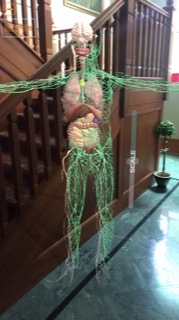
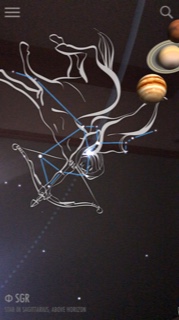
Anatomy 4D is similarly useful to the Skyview app, where irrespective of if you are in a closed or open space, the app determines your location. A large advantage of all AR technology is providing students with an experience you could not normally provide due to geographic or economic factors. You can gaze for planets or star constellations to provide students with a different view of astronomy (SkyView Lite, n.d.). Teachers must take advantage of scaffolding, as students can physically transcend viewing space, and enhance cognitive efficiency of students if prompts in the app are prepared and tested for.
Both apps apply to constructivist theory, as users are able to engage on a deeper level with the content they are studying, and effectively work in groups for classwork to build knowledge from each other on concepts/content they are familiar with. Akçayır & Akçayır (2017) undertook a meta-analysis of 68 research articles of AR in educational settings, finding that the greatest advantage was promoting enhanced learning achievement, so utilising paired/group learning would serve the best results for fostering creativity and learning simultaneously.
The juxtaposition to an AR app such as QuiverVision is large. This app is too easy to use with limited intellectual demands from students. Skyview or Anatomy 4D allow for inquiry based learning because the visual content and concepts are appealing for students, whilst much of the virtual cues in QuiverVision limited this in my opinion.
References
Akçayır, M., & Akçayır, G. (2017). Advantages and challenges associated with augmented reality for education: A systematic review of the literature. Educational Research Review, 20, 1-11.
Azuma, R. (1997). A survey of augmented reality. Presence. 6(4), 355-385.
Bower, M., Howe, C., McCredie, N., Robinson, A., & Grover, D. (2014). Augmented Reality in education – Cases, places and potentials. Educational Media International, 51(1), 1-15.
Skyview Lite. (n.d.). SkyView Lite. Retrieved from https://apps.apple.com/au/app/skyview-lite/id413936865
 EDUC3620 Digital Creativity and Learning - Peter R's blog